


01/03
paper-theory3
VR & Mental Health
There is a lot of movement in this field, the bigger portion of VR use for mental health treatment is still guided by professionals, with VR therapy for i.e. PTSD treatment or various exposure-therapy apps for treating different phobias. [Botella et al,Virtual reality treatment of claustrophobia: a case report], [Rothbaum et al, Virtual reality exposure therapy for PTSD Vietnam veterans: A case study], [Horigome et al, Virtual reality exposure therapy for social anxiety disorder: a systematic review and meta-analysis]
But more and more apps are coming out that also promise self-facilitated mental health support and access to tools and knowledge concerning the issue. VR Apps that were found to show potential for therapeutic use like Liminal, Tripp or Happy Placeare putting the users in immersive environments, that are designed for meditation, relaxation and inducing different mindstates. Pretty important and stated in most articles, studies and descriptions of the apps themselves is that these freely available self-help tools can never be and are not meant to be a replacement for therapy. They can be a profilactic tool for self-regulation before therapy might be necessary, or one of many possible supporting tools during therapy.
From the applications and studies in this intersection, there is a lot to be learned about constructing an atmosphere of comfort, and possible setups of how self-applied an application should be, and what kind of professional support, if any, in the process would be necessary.
[13]


[14]
[15]
[16]
[17]
[18]

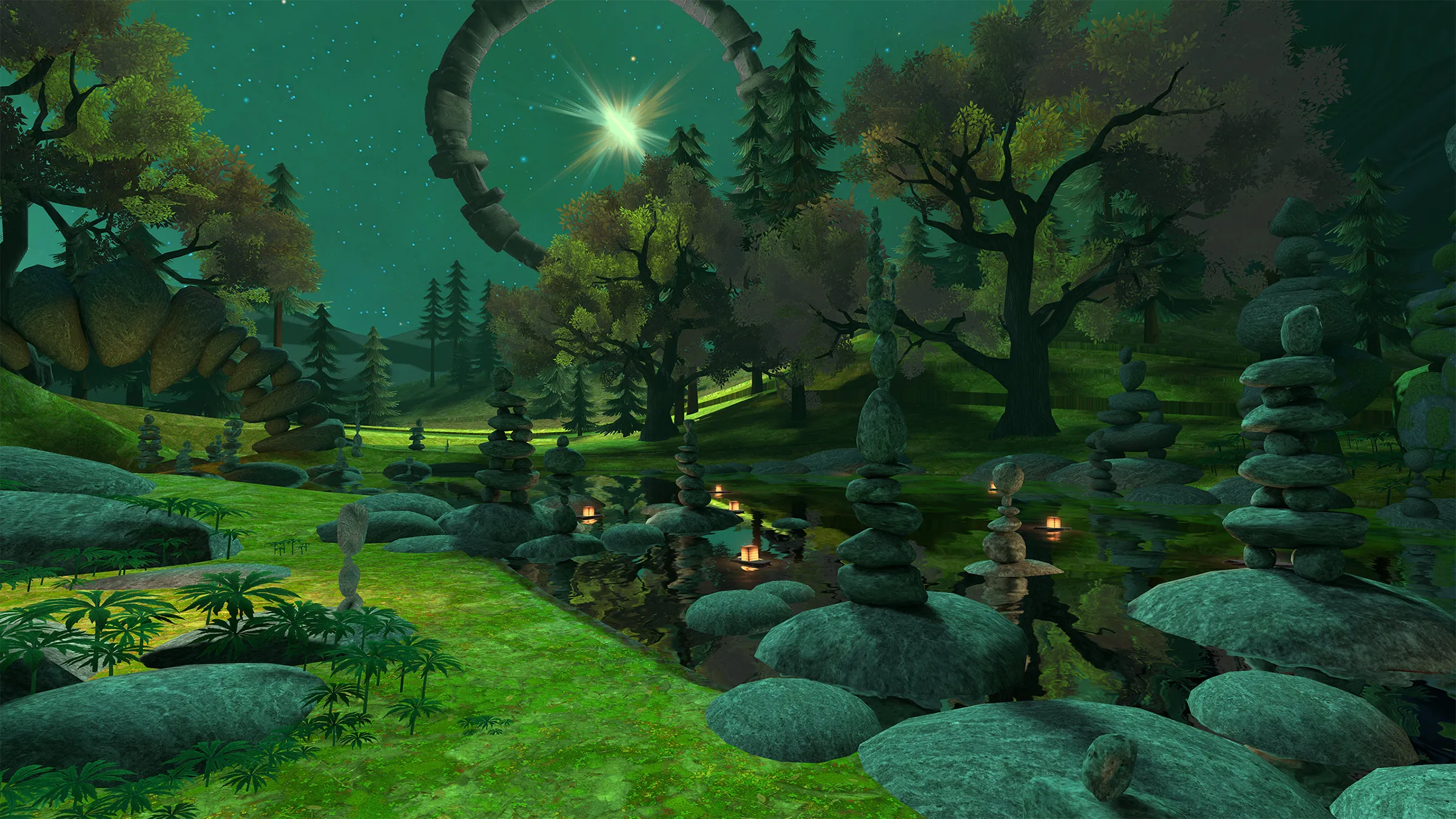
VR App Tripp: A virtual reality meditation platform.
Similar to Tripp: Liminal, also a VR platform for different meditative/relaxing experiences.
[I07,I08]
[I09,I10]